
Grammar and writing have never been my strong suit. I've always been more of a math and science person, and the formulas behind the English language have never fully clicked for me.
In this report, I tried my best to figure out what the formula for creator grammar is. How do creators describe themselves? What verbs are creators using? How are they formatting numbers if they're using them? Are they using pronouns anywhere? Is there anything that isn't obvious to a beginner?
There were some clear answers and maybe not so clear answers in this one.
How I did this
I reviewed 258 English-language profiles across LinkedIn, Instagram, and Threads. Every one had over 10,000 followers, and I screenshotted each profile. Six creators appear on two platforms, and each of their profiles is counted separately.
Each profile was coded for line breaks, verb usage, full sentences and fragments, pronouns, proof claims and how numbers were written. Claude helped with the coding and data processing, built the graphics, and helped me edit this report. I spot-checked the coding against the screenshots. The writing and the conclusions are mine.
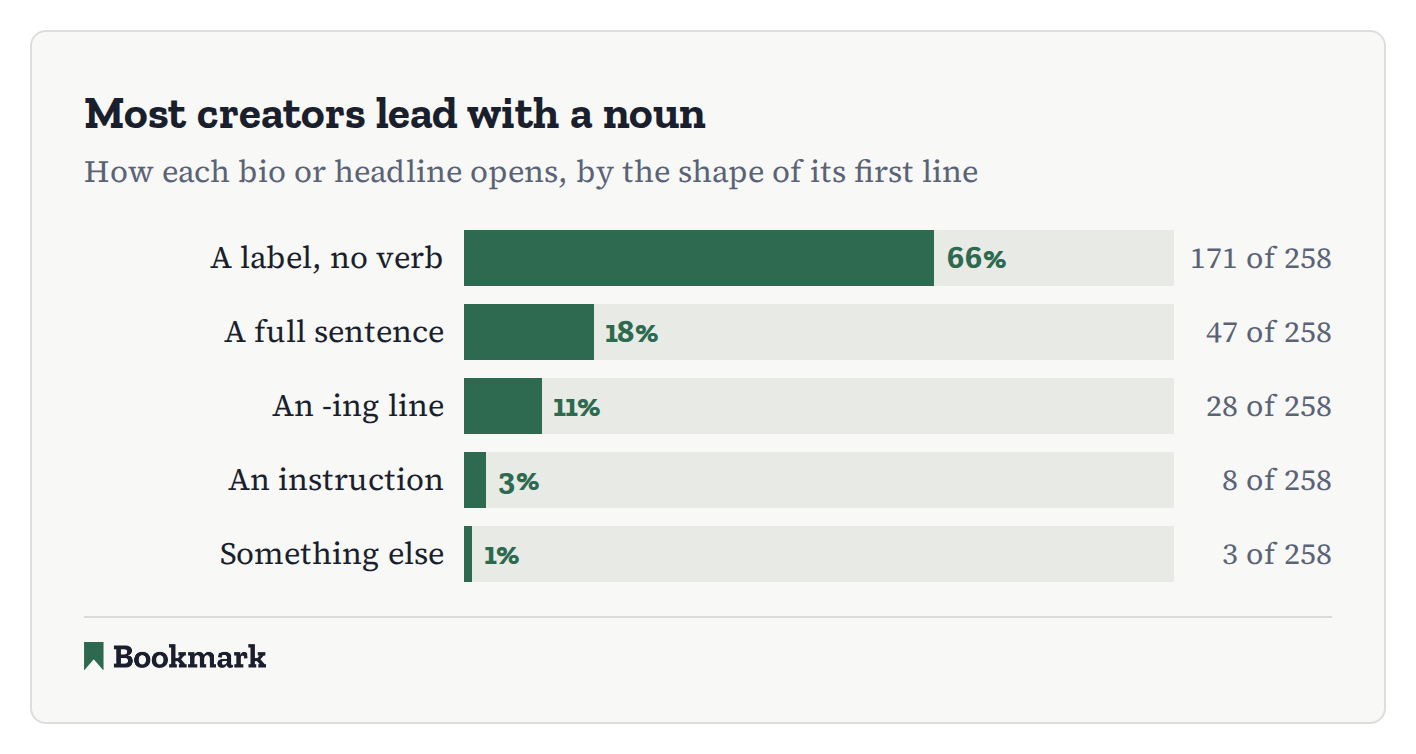
Most creators lead with a noun
Two-thirds of creators open with a label, not a sentence. They don't open with who they help or what they do, they just say "who I am" out of the gate. It can be as simple as "Neuropsychologist", "Organizational psychologist" or "TX trial lawyer".
Most creators use a verb, just not the same one
Most creators have a verb somewhere in their bio or headline, but there's no single form they reach for. 156 of the 258 creators I looked at used one:
- 79 wrote a full sentence
- 63 gave an instruction, like "Join" or "Follow"
- 51 used the participle form of a verb, the -ing version
39 used more than one kind, most often a full sentence and an instruction in the same bio, which is why these add up to more than 156.
When creators help, they're "helping"
The verb "help" is where a pattern shows up. 36 of the 258 creators I looked at used "help" in their bio or headline, in 37 lines. 22 of those lines had it as "helping" whereas "I help" was 11, and 4 were "to help".
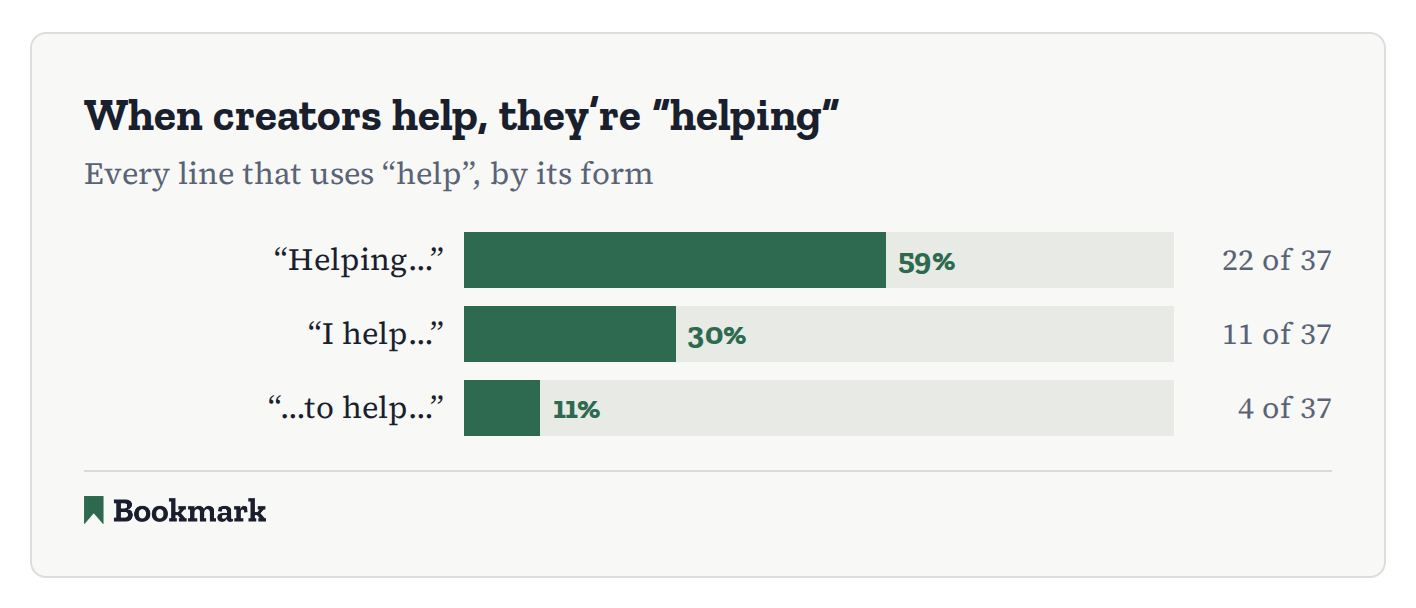
The participle form of a verb makes sense here as it shows what you're actively doing as a creator.
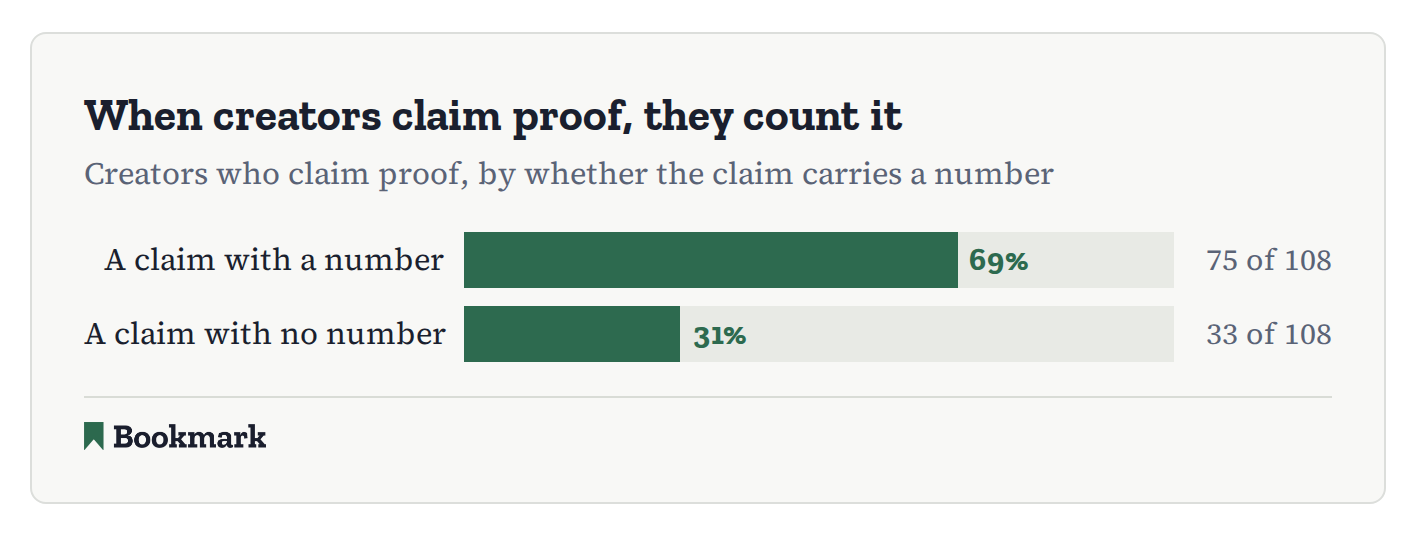
When creators claim proof, they count it
Out of the 258 profiles, 108 of them are claiming some sort of proof. It might be "bestselling author", "130K on YouTube" or "200+ clients coached".
Out of the 108 that do claim proof, 75 of them claim proof with concrete metrics. They're not vaguely describing their proof, they're putting numbers to it, which makes it more concrete and, in my opinion, more tangible.
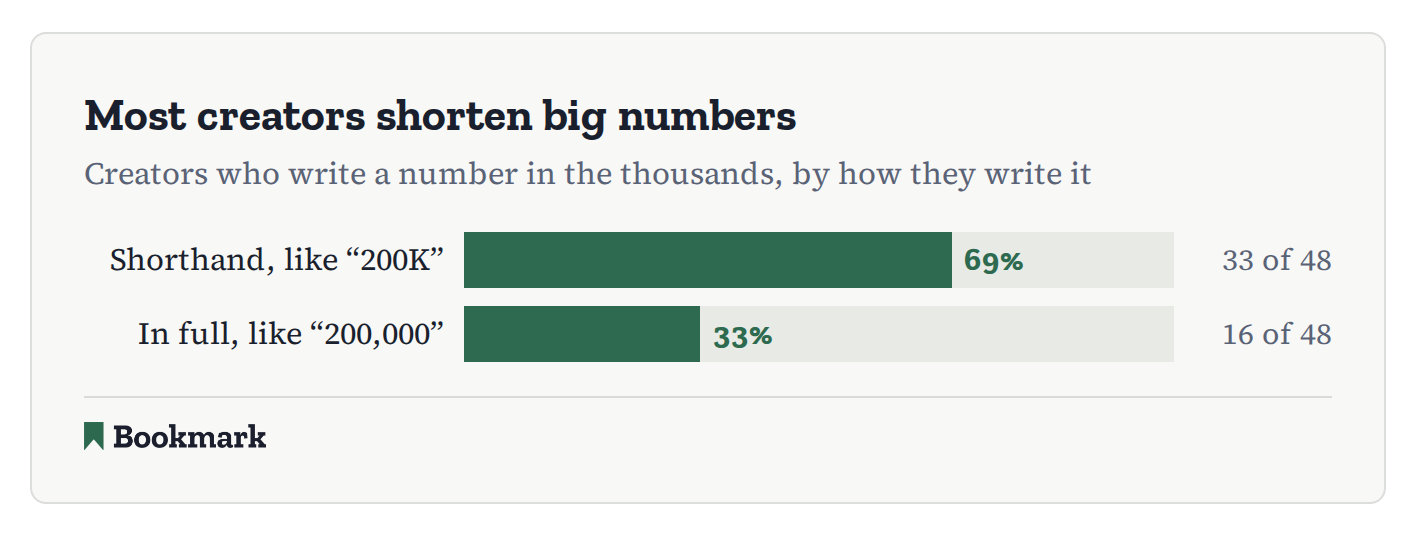
If you're using a number with thousands, you can put "200,000" or "200k". Personally, I would lean towards 200k just for conciseness, and so do most creators, 33 to 16.
Two-thirds of creators use neither "I" nor "you"
173 of the 258 creators I looked at don't use "I" or "you" anywhere in their bio or headline. Instead of something along the lines of "I'll help you do X", you'll see lines like "Helping creators build more valuable businesses".
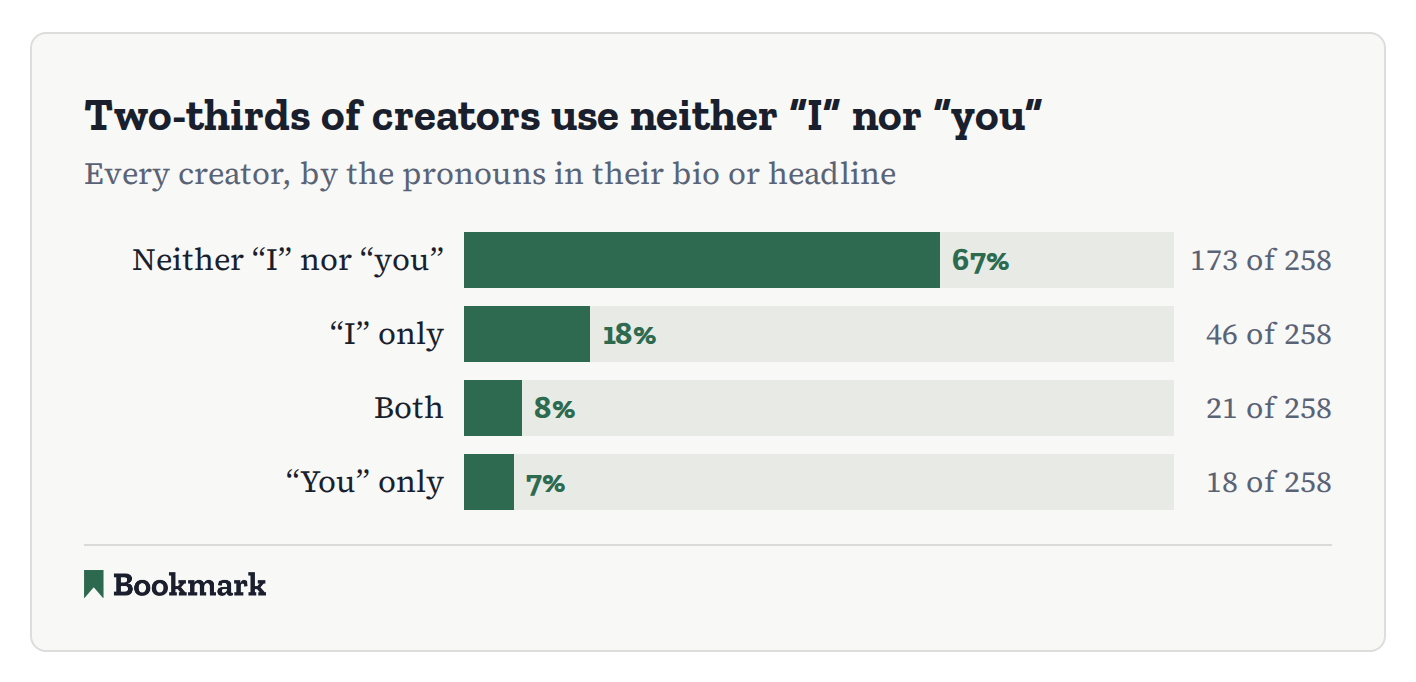
Personally, seeing the pronouns dropped makes me think it's more important to just name who you're trying to help.