
The featured section might be the most important part of your LinkedIn profile. That's where many people ask for an email, sell their products or services, or show the social proof that they're legit.
How are creators actually using it though? What are they putting there?
In this report, I went through over 100 LinkedIn profiles with over 10,000 followers, and this report has some of the clearest patterns I've found yet.
I looked at the offers creators had, how often they asked for an email, the relationship between the number of cards and offers in a featured section, what the differences were between smaller and larger creators, and the simple structure the smallest sections share.
How I did this
I reviewed 105 LinkedIn profiles with over 10,000 followers and screenshotted their profiles and featured sections. I only included creators who have a featured section, so this is about how creators use it, not how many do.
Each of the 763 featured cards was coded for what it's there to do: an offer (a paid product, newsletter signup, booking or lead magnet), proof (a credential, press mention or testimonial), or content (a post or article with no ask). I also recorded where each card sits in the section. Creators are split into four equal groups by follower count: under 25k, 25k to 69k, 69k to 166k, and over 166k.
Claude helped with the coding and data processing, built the graphics, and helped edit the writing. I spot-checked the results against the live profiles, and the conclusions are mine.
70% of creators have an offer in their featured section
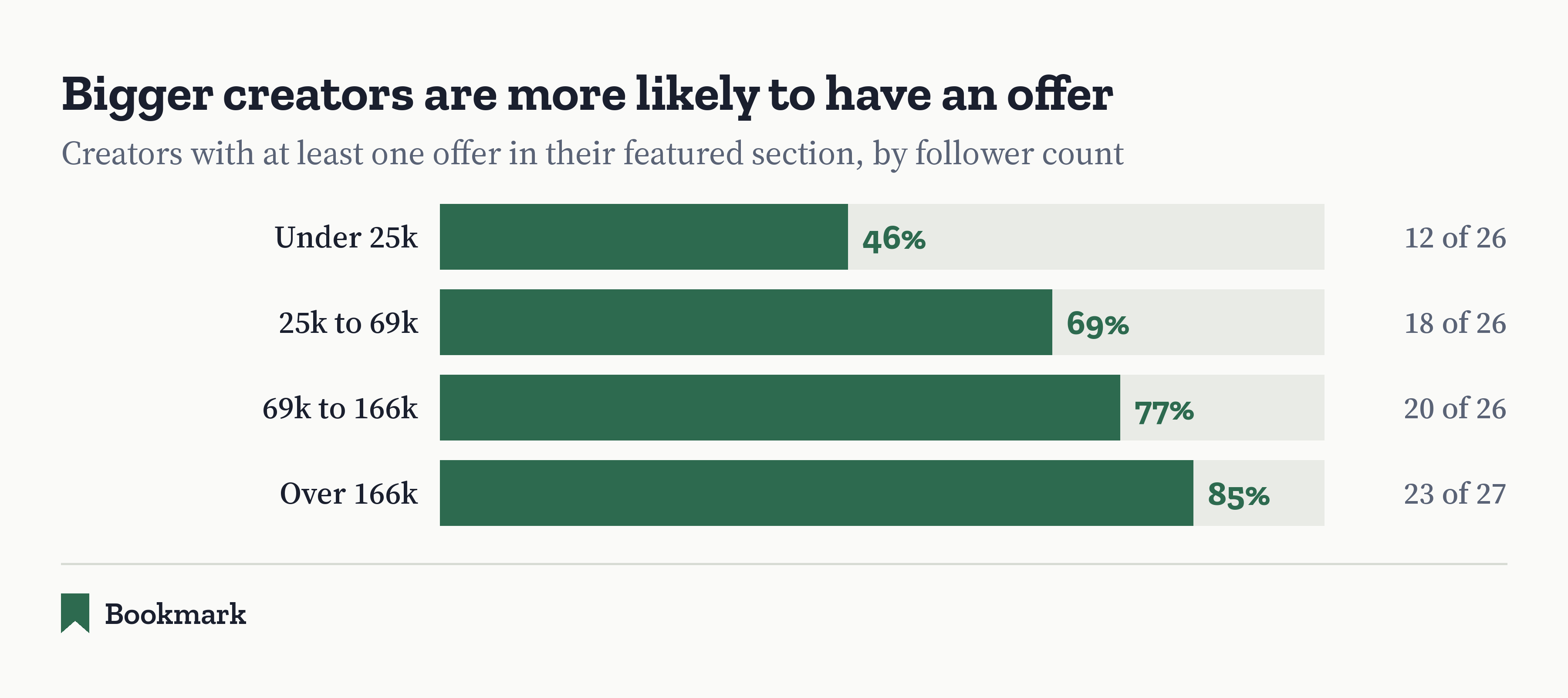
Most creators, 73 of 105, have an offer in their featured section. That makes complete sense.
What was interesting was seeing that the larger the following, the more likely a creator is to have an offer in their featured section, from 46% under 25k followers to 85% over 166k.
If you dive even deeper into that pattern, there's one particular offer that really stood out.
The biggest creators are the most likely to lead with email
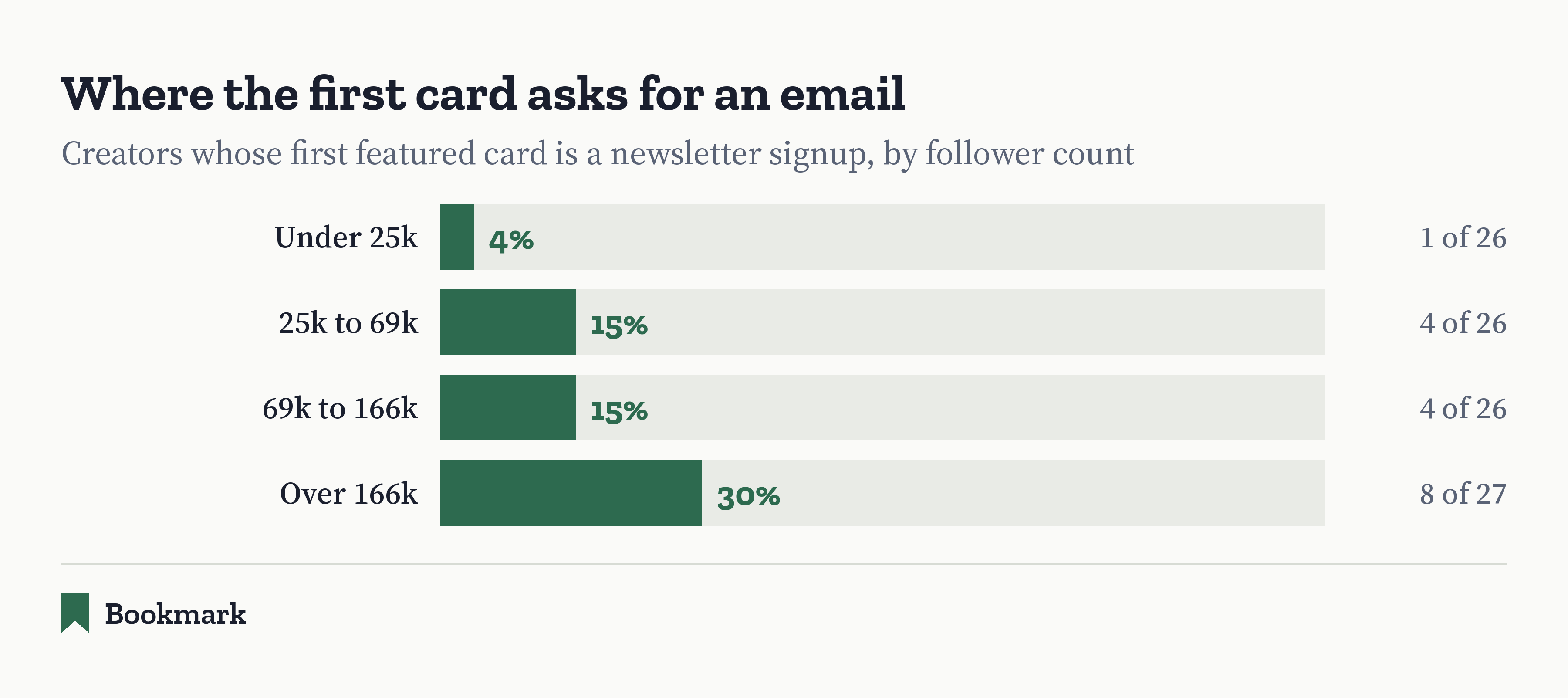
The larger your following, the more you seem to value an email subscriber. At least that's my conclusion from this chart. Only 1 of the 26 smallest creators opens with a newsletter signup, compared with 8 of the 27 biggest.
Paid products are still the most common offer. But email is the one that climbs the most with size: 4 of the 26 smallest creators have a newsletter signup anywhere in their featured section, compared with 12 of the 27 biggest.
One thing to note here is that this only shows what's in the featured section. Some smaller creators may not be sending a newsletter quite yet, but all of these creators do have at least 10,000 followers on LinkedIn, so they probably should if they don't.
A 25-card section holds about as many offers as a 4-card one
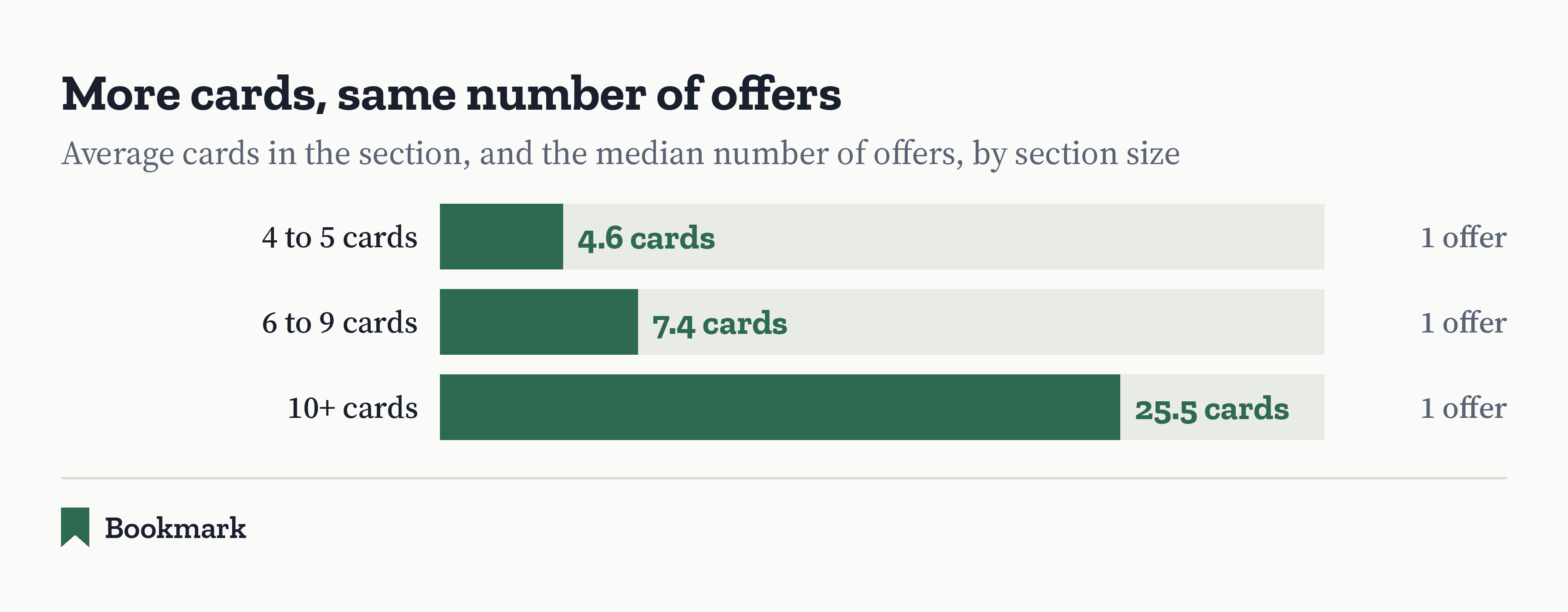
The median number of cards in a featured section is 3.
However, once a featured section has four or more cards, the median number of offers is just one, whether it holds 4 cards or 25.
Small creators prove their worth, large creators make their offer
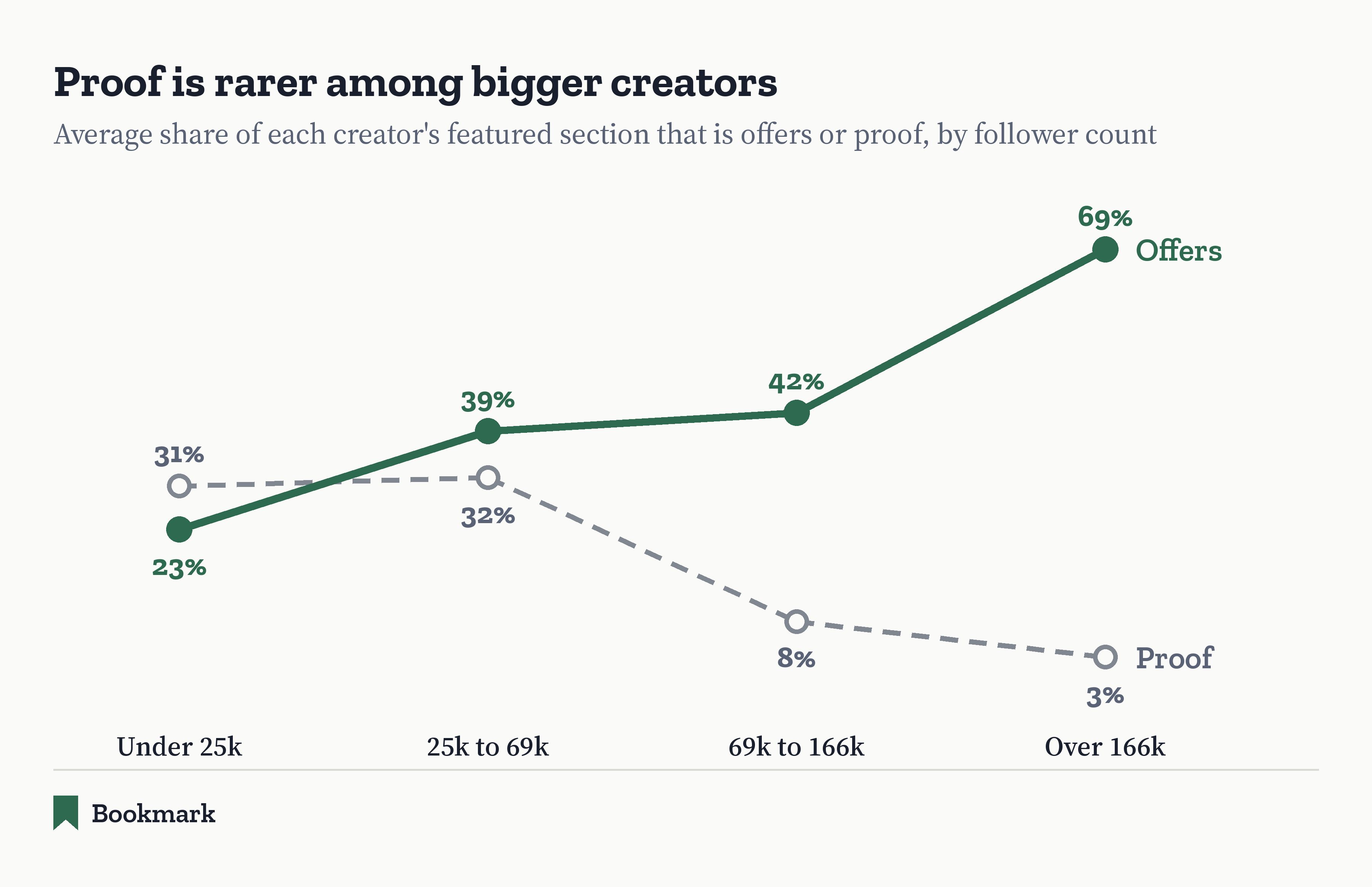
This pattern was fascinating to see but makes sense from a LinkedIn perspective. 18 of the 26 smallest creators (69%) have at least one proof card, compared with just 4 of the 27 biggest (15%).
If you're a smaller LinkedIn creator, there seems to be a feeling that you have to prove your credibility way more than a larger creator might. The data can't show what creators are feeling, but it fits that.
If you're a smaller creator, you're far more likely to put proof and validation points in your featured section. If you're a larger creator, proof almost disappears and offers fill most of the section. I think that follower number does the validation for you.
Something free, something paid
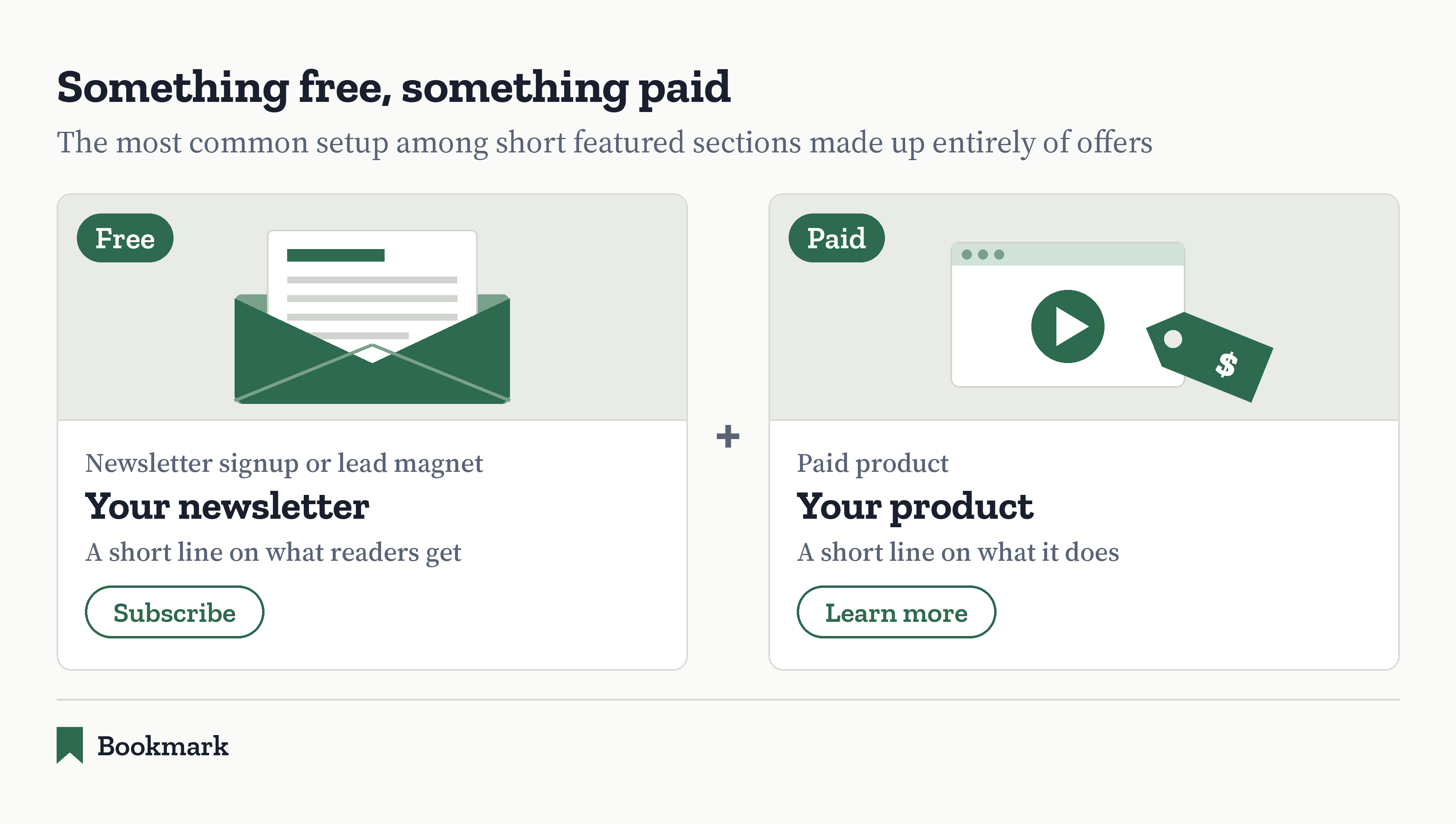
The majority of creators I looked at (59 of 105, 56%) had 3 or fewer cards in their featured section. Among the 40 with two or three cards, there was a clear pattern: 23 of them, a small group but more than half, made every single card an offer.
11 of those 23 paired something free, like a newsletter signup or a lead magnet, with a paid product.
Their featured section is just offers. No fancy or complex way of thinking about it. One thing free, one thing paid was the most common structure.