
A restaurant in Beijing put five dishes on a card two different ways. One version did nothing. The other lifted orders up to 20 percent.
The difference was one word, but we'll get to it.
If you have visitors to your business already but would like to increase your conversion rates, social proof can be a huge factor in that. Social proof being anything that shows potential customers what other customers or users already chose ahead of them.
How to present social proof to your customers can feel overwhelming though. Should we tell people what our favorite items are? Should we brag about our awards? Should we show how many customers have purchased from us?
In this post, I go over three studies on why social proof works, what I found looking at 88 signup pages and three experiments you can run on your own business to increase your sales with social proof.
Let's dive in.
We copy our neighbors
Let's start with the concept of comparing to peers for social proof.
Opower was a software company that worked with electric utilities across the United States. Today, they're a program within Oracle.
In 2009, they started an experiment to see if mailing utility power customers a report showing how much electricity they used compared to neighbors would have any effect on their energy usage. To test, they took 600,000 customers and had one part of that group receive reports and the other didn't receive anything.
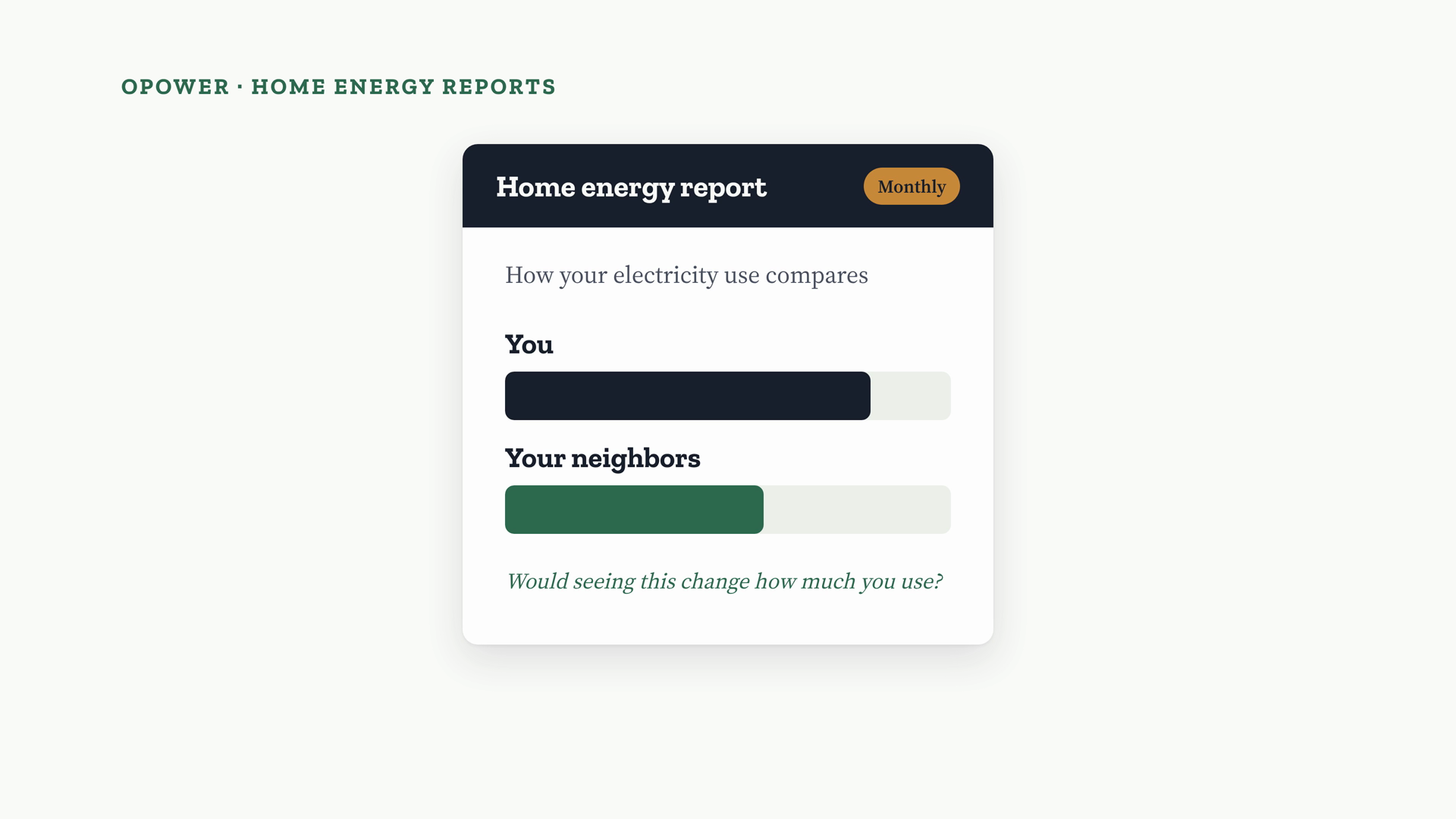
What they noticed is that overall, electricity usage went down by 2 percent. And the heaviest users, the top 10 percent, cut by 6.3 percent.
If you scale that up across communities, in 2025, Opower's programs overall reported that they saved customers a total of $369 million on their energy bills across North America. A few percentage points at this scale is absolutely massive for communities.
Safe to say that we naturally like to compare to one another as social creatures and if we're the outlier, we typically don't want to be. Unless it means we can be best of the best, which we'll get to next.
Borrowed credibility matters
When you go to any bookstore, it's natural to go straight to wherever the bestsellers shelves are. Especially if you haven't been on BookTok.
In a study back in 2004, Alan Sorensen, an economist at Stanford, wanted to see how much it impacts hardcover fiction book sales if you're named a New York Times bestseller.
The nice or not so nice thing depending on which author you talk to about the New York Times bestsellers list is that it's a sample of some stores' sales numbers, so if you're selling well in the right ones that they sample, you'll get picked. If you're selling well in other stores, but not in the sampled ones, you're a little unlucky.
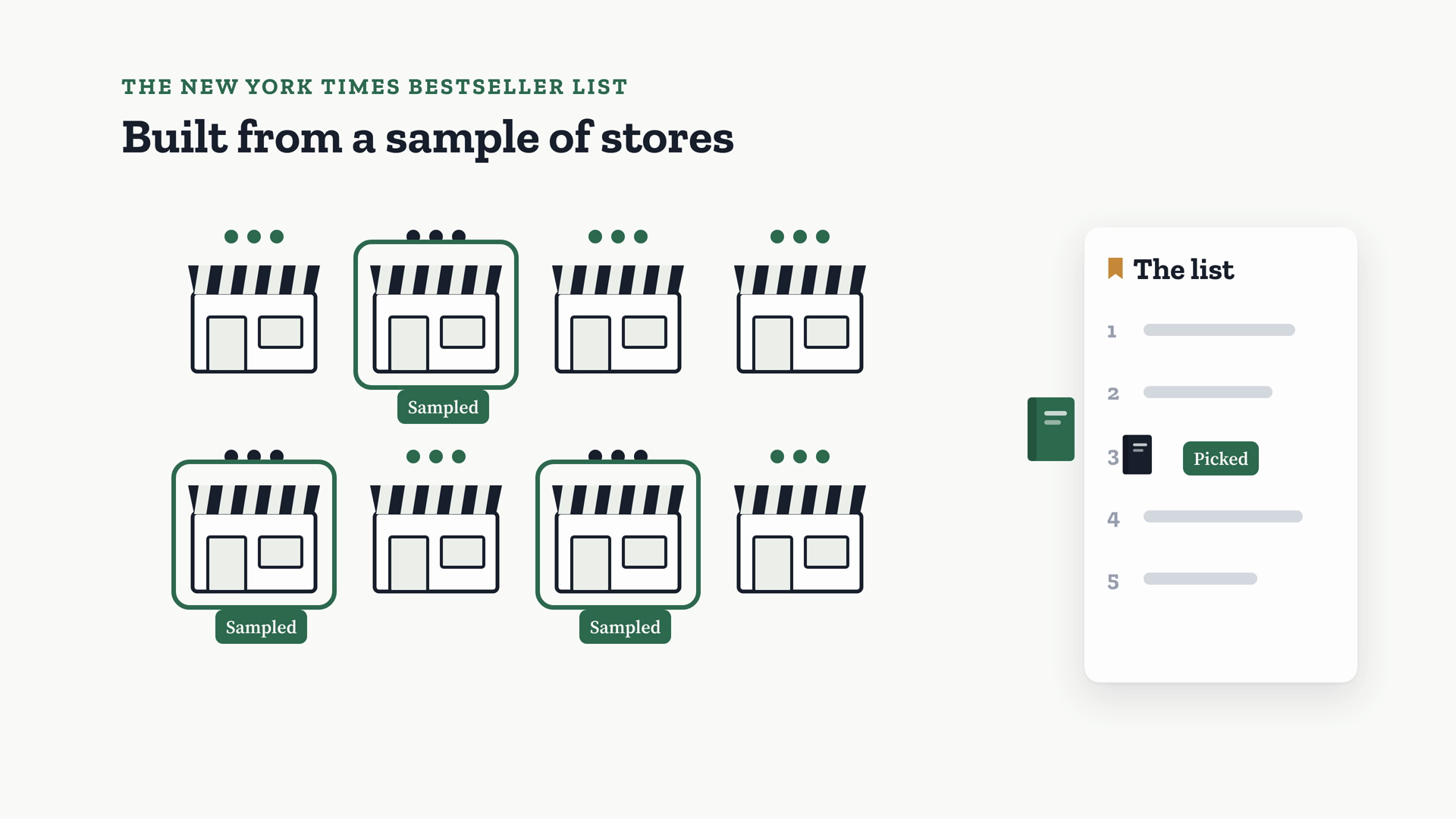
For this study though, because of that sampling process, it gave Sorensen two groups to compare to each other. The books that did make the New York Times bestsellers list and the books that probably should have if they had different sampling.
On average, a book's first-year sales went up 13% if they made the New York Times bestsellers list, so it made an impact but wasn't crazy. However, if this was your first time ever as an author making the New York Times bestsellers list, it was massive. It increased book sales by 57%.
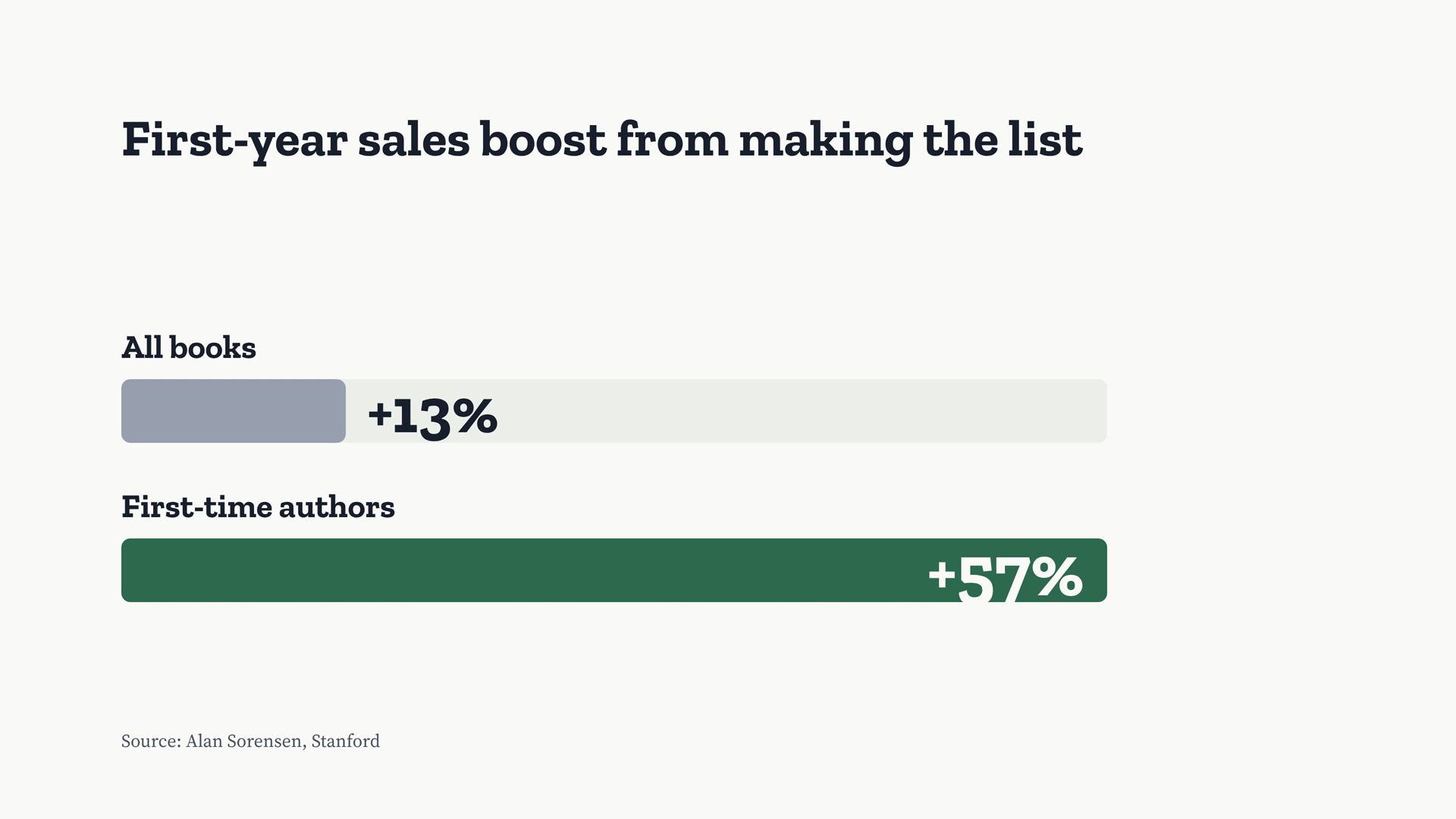
It goes to show that if someone your customers already trust can lend credibility to a new business, it has a massive impact.
Now as I mentioned above, bestsellers and ranking lists in general can have their faults as they can just sometimes lift the wrong books. But what if you just make it simple and say "here are the top 5 most sold items"? Does that have any impact?
Name what's popular
If you have a business that is selling many goods, this one is a great example to take note of.
A restaurant chain in Beijing had a menu of about 60 dishes. Researchers went to this business and tested whether telling diners what was popular changed what they ordered.
Some tables got a listing of the top five most popular dishes from last week and others got a list of five dishes without calling them popular. Another group didn't get any list, just the menu.
By calling out what was popular, diners ordered those five dishes 13 to 20 percent more.
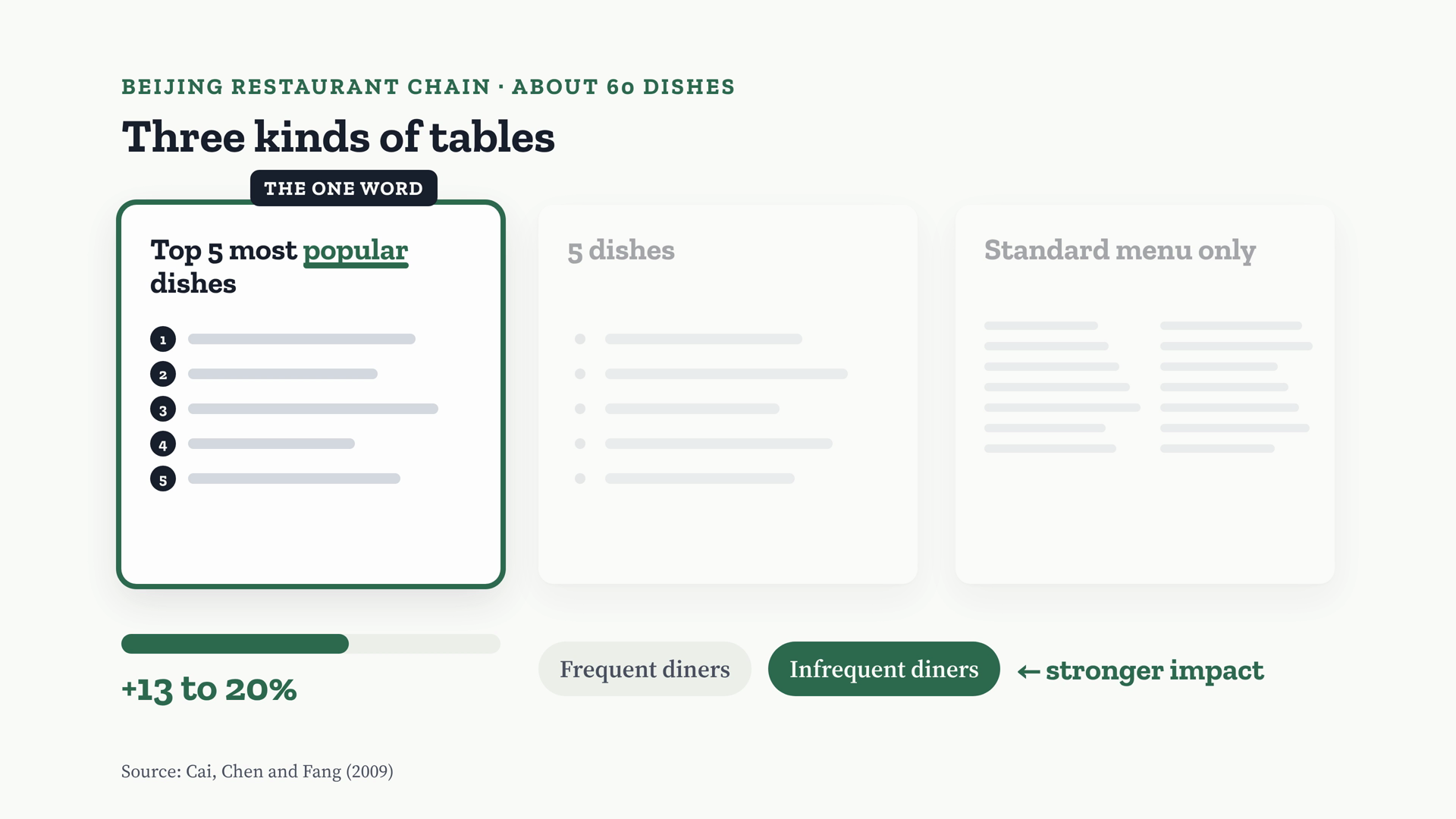
What was even more interesting is that just being on the card didn't help, but being called popular did.
And if you compare frequent diners to infrequent diners at the restaurant, this had a stronger impact on infrequent diners.
If your business has a lot of options, it might be worth calling out what's popular to help with information overload.
How businesses are showing this live
Now, these last 3 studies were all done about 15 to 20 years ago. So, I wanted to see what are businesses doing currently for social proof. What might be some trends or things to try yourself?
I reviewed 88 signup pages from LinkedIn, Instagram, BetaList, and Product Hunt.
Out of the 88, 59%, or 52 of them, had no social proof at all.
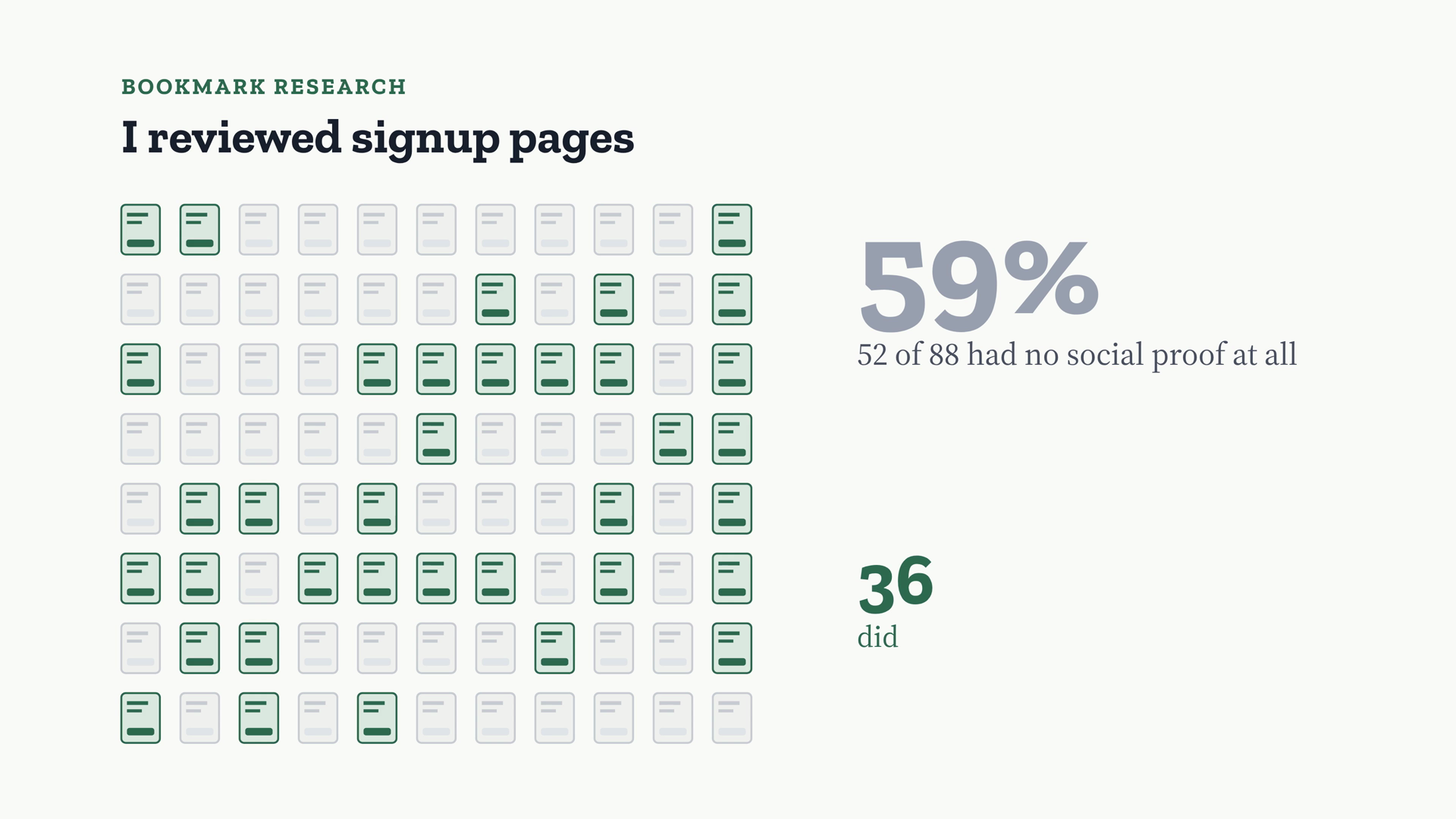
For the 36 that did, I broke them down further. Some even used more than one category of social proof.
15 of them used user or subscriber counts, 12 used other company logos, 11 of them used launch badges, 6 of them used ratings, and 4 of them used testimonials.
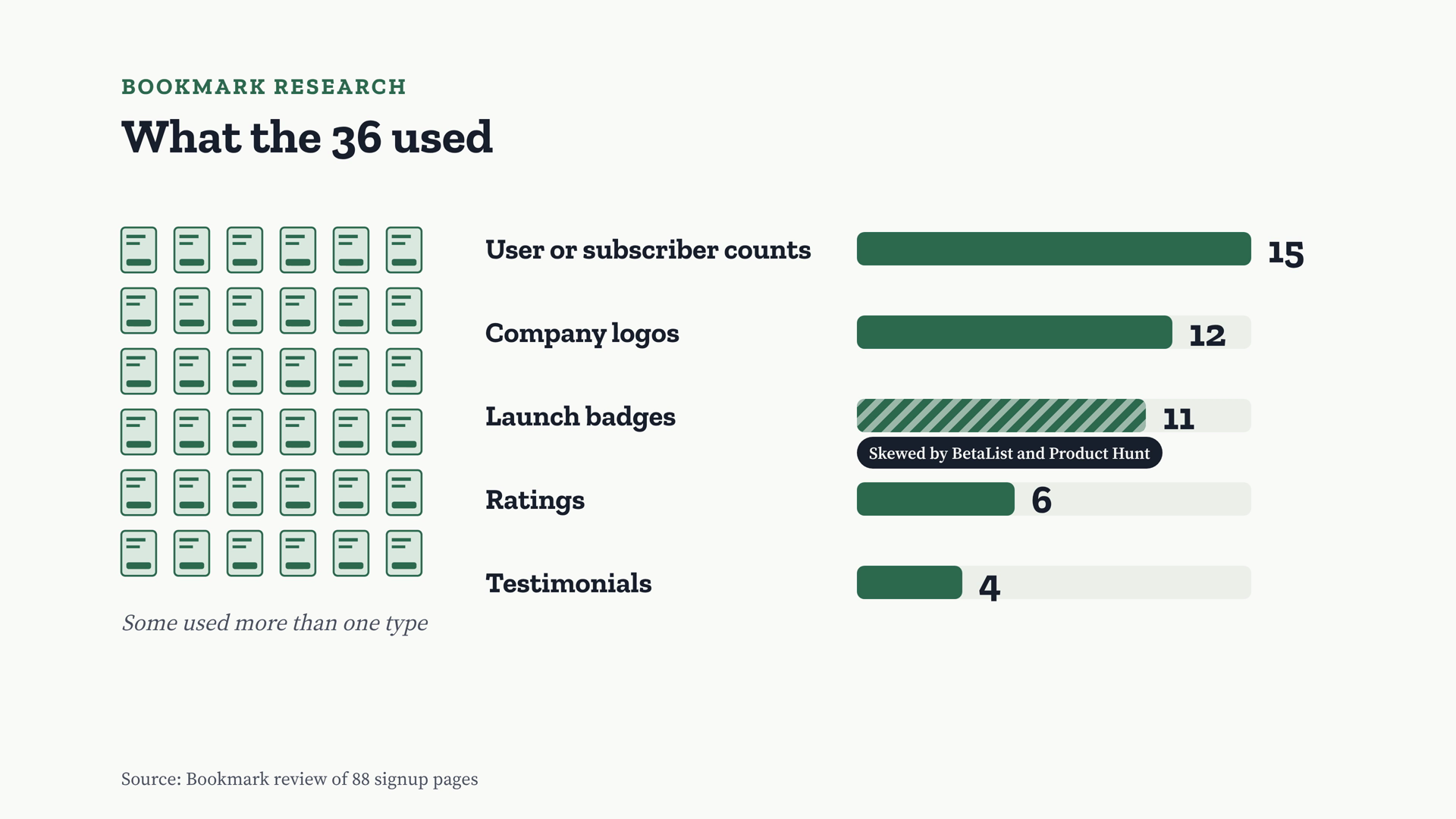
I should note with using BetaList and Product Hunt, launch badges were definitely skewed here, since those are the sites giving the badges out.
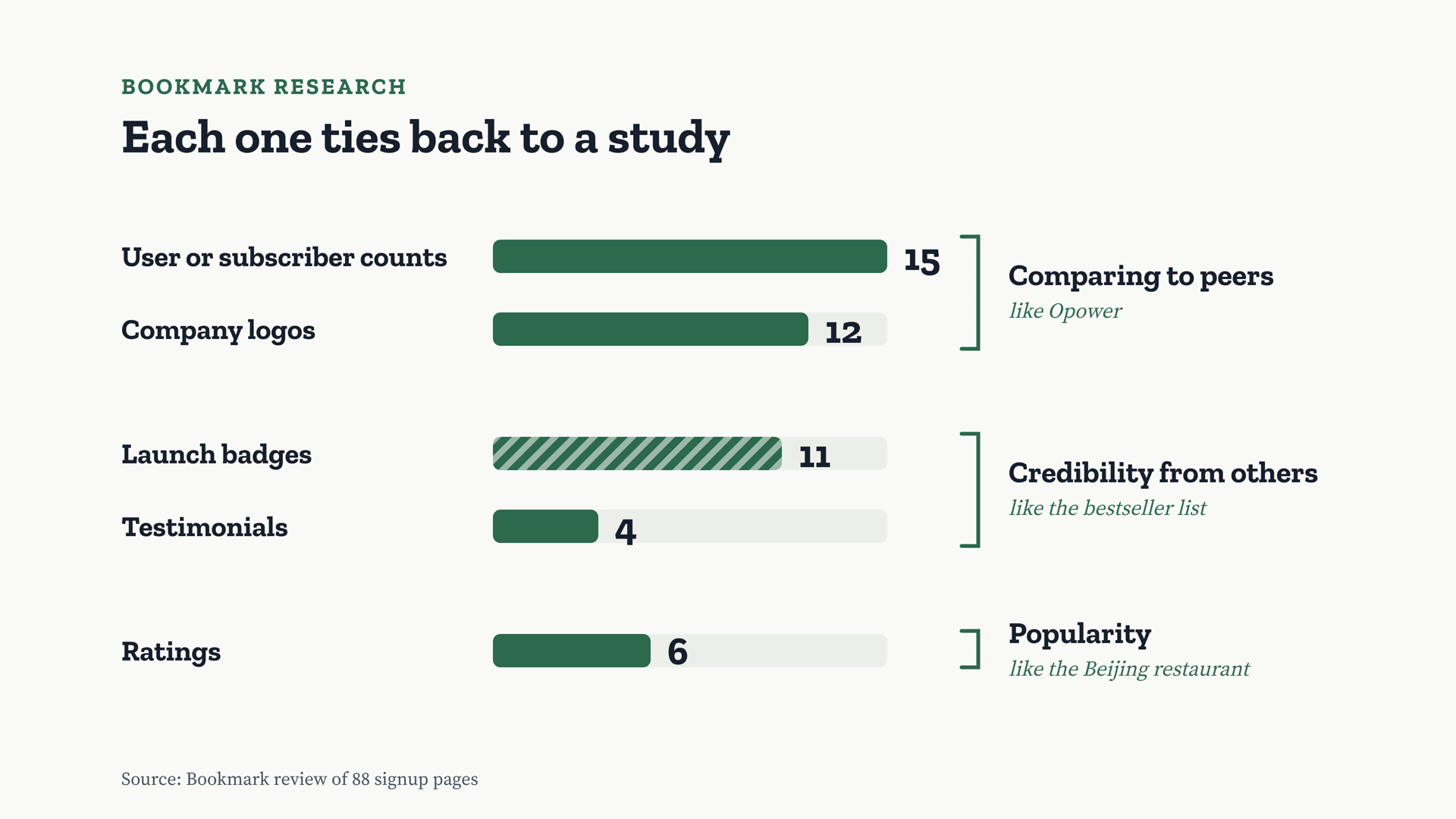
And if you look at the 5 different categories of different social proof here, to me, they all tie to the studies we went through. User and subscriber counts and logos are definitely that comparing to peers factor. Launch badges and testimonials are the credibility piece from others, and ratings are smacking you in the face with popularity if there's a lot and they're all high ratings.
Three experiments to run
With all of this in mind, how might you experiment with social proof with your business?
Here are three experiments you could try in the next 90 days:
Label your most popular option
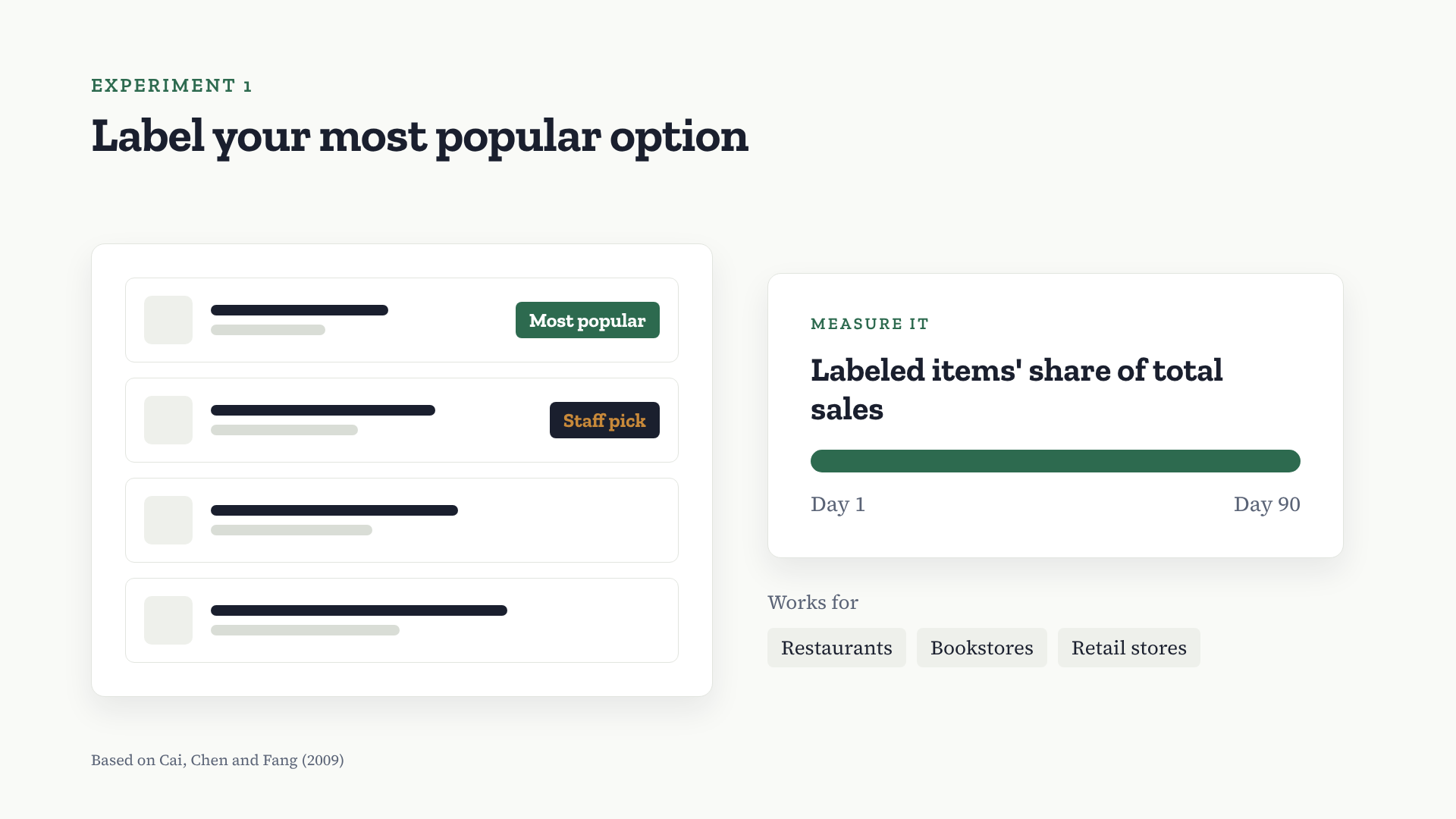
This experiment is really simple and if you have a business that has a lot of different options, this is a no-brainer in my mind. It's as simple as putting a label next to the pricing of the product with “most popular” or having something like “staff pick”.
You could even test having “most popular” and “staff pick” labels if you have a restaurant, a book store, or a retail store of any kind really. I didn't see a staff pick research report out there, but that's why it's worth a test!
Put the labels on similar to the Beijing restaurant study and see if those items' percentage of total sales increase over a 90 day stretch.
Get an award or label
If you're like me, going for awards feels weird. On one hand you're like man, these are cool and the recognition is awesome, but on the other hand, you're like this really isn't the point of all of it.
If you're going back and forth about trying to go for an award, think of it more as an experiment for how it might impact your business.
Being part of a “best of list”, a local award, or featured in your industry's top publication could be a huge credibility boost for your business.
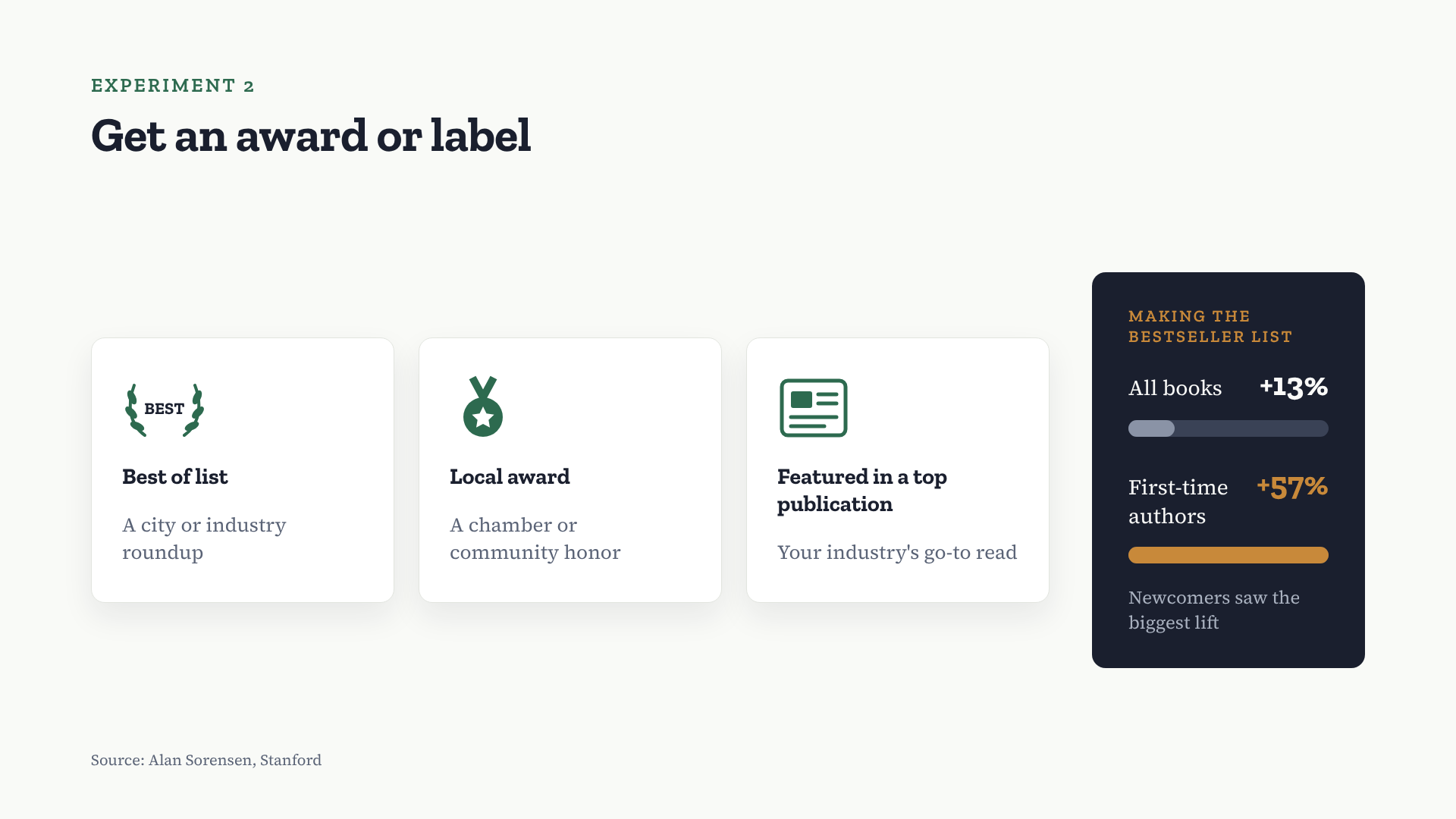
If you're already known as a great business in your industry, it might not have as much of an impact as we saw with the New York Times study but if you're newer to the industry, it could be an experiment that is a complete game changer, the way the bestseller list was for first-time authors.
Add a one-liner to your sales page that compares your customers to their peers
If you have customers already, this is a good one to run and another easy one to test.
Just go into your sales page, and add a one liner that compares your potential customer to your current ones just like the Opower reports did. Examples could be “1,000 agencies use us to save thousands of dollars, you should join them” or “We've saved thousands of parents hours each day already”.
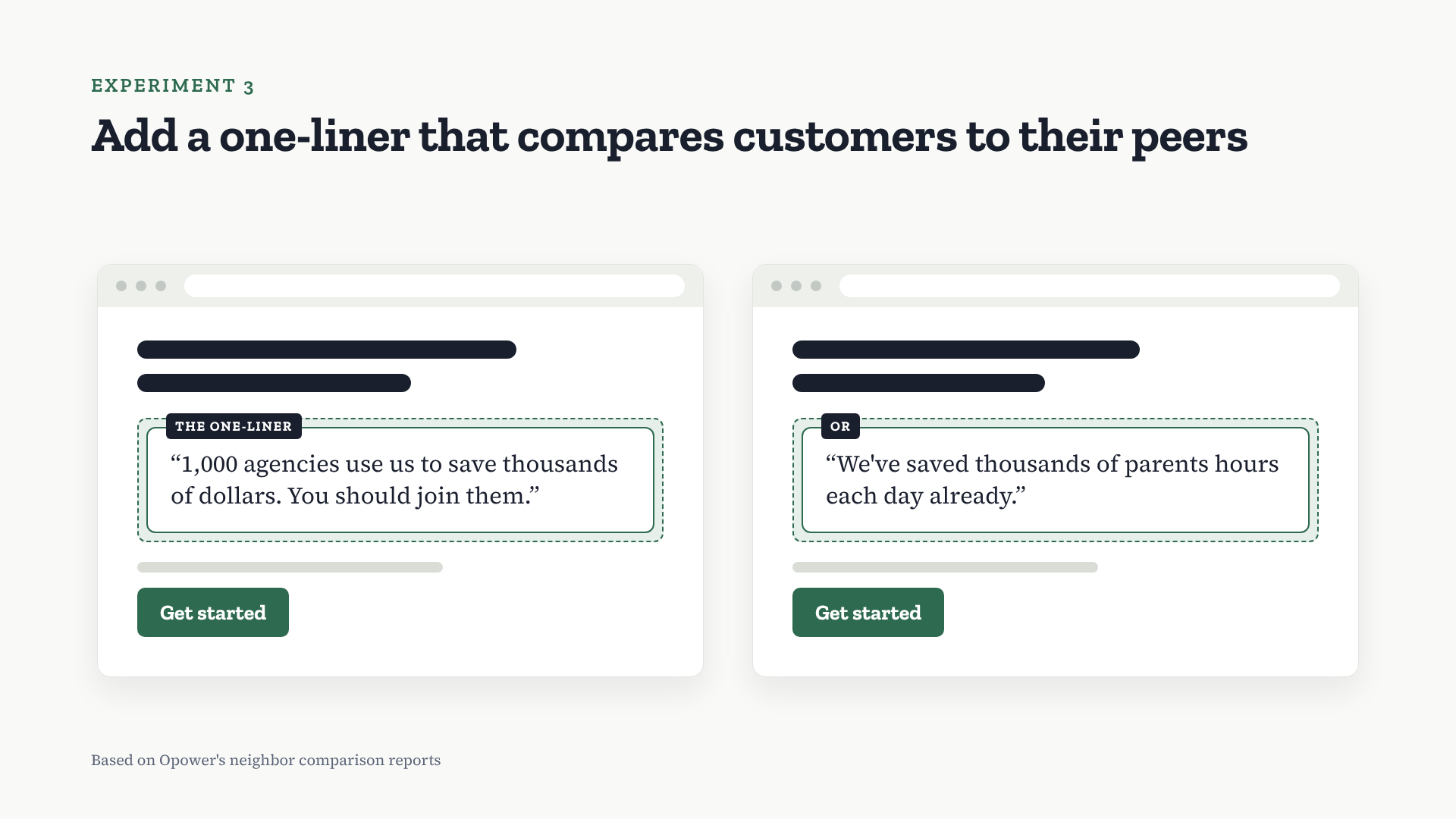
Another way to think about this experiment: what can you say on your sales page that gives your customer the feeling of being the odd one out if they don't join?
So, pick one of these, run it for 90 days and see what happens.